Key Takeaways
Proper dock height starts with accurate water depth measurements
Maintaining clearance above the water protects your dock and improves usability
Water conditions and lake activity impact recommended dock height
Why Proper Dock Height Matters
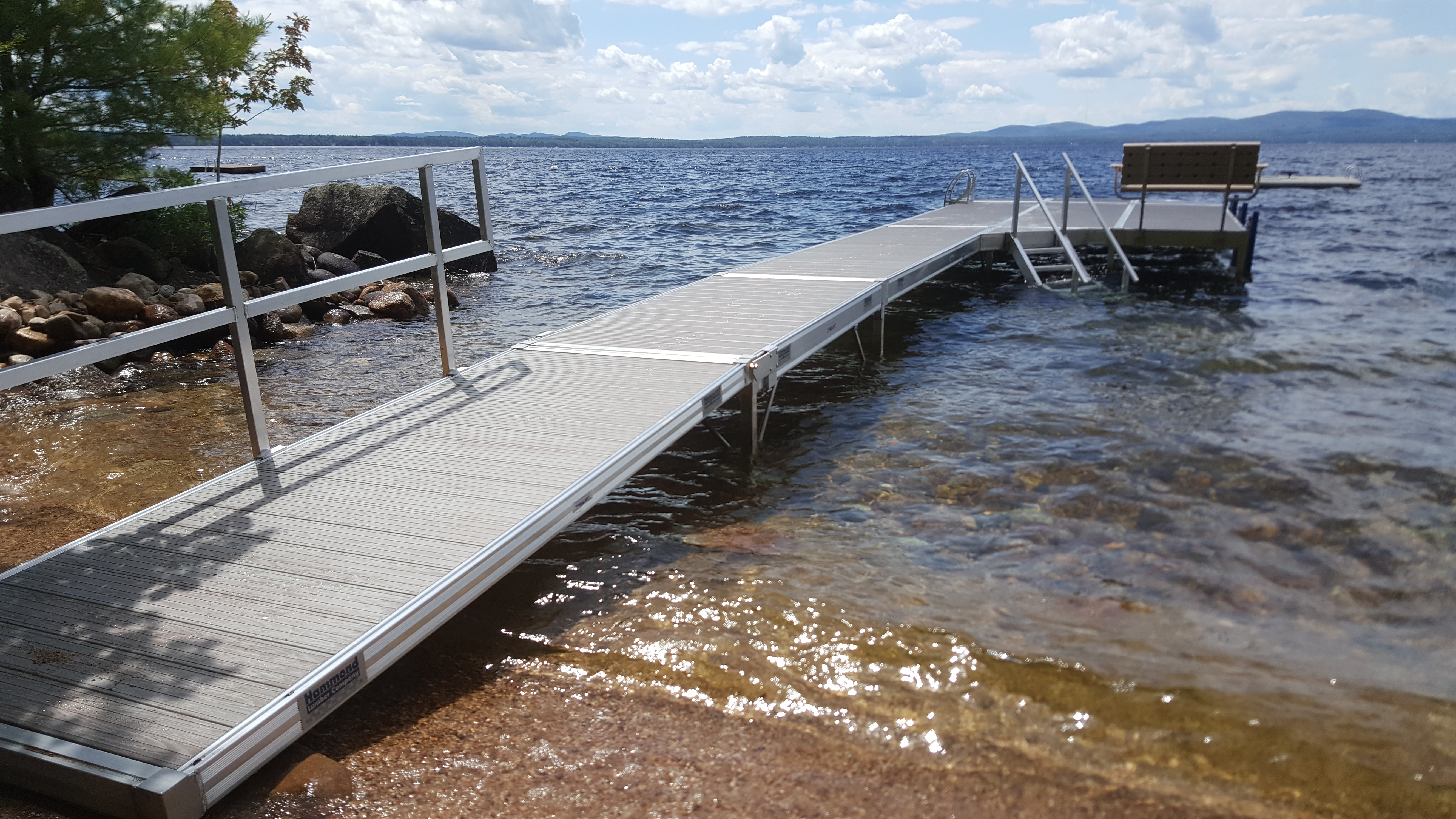
Setting your dock to the proper height directly affects its safety, usability, and long-term performance. For boaters, the dock height must match the height of the vessel’s gunwale. When the dock sits too high or too low relative to the boat, passengers are forced to take exaggerated, unstable steps—a prime recipe for trips and falls.
Improper dock height also creates unnecessary mooring stress. When the dock sits too high, mooring lines pull upward on the boat’s cleats; if they sit too low, they pull downward. Over time, especially in areas with heavy boat traffic or strong wakes, this uneven tension can damage cleats, loosen hardware, or strain your dock structure.
Of course, water level variance is always part of the equation. In areas exposed to heavy traffic, significant tidal influence, or spring runoff, water levels can shift dramatically. If a dock sits too low, high water or storm surges can submerge the decking. When that happens, buoyant force can rip the decking off the frame—a common cause of insurance claims after spring storms.
Finally, there are regulatory considerations. In the US, many new dock installations—especially those for public use or in certain homeowner associations—must comply with the Americans with Disabilities Act (ADA) guidelines, which establish accessibility standards, including slope and height transitions (ADA Compliance, n.d.). Meanwhile, state agencies such as the Department of Natural Resources and the Army Corps of Engineers have specific dock clearance requirements to protect marine life (Recreation Law, 2024).
Step 1: Measure the Water Depth Where Your Dock Will Sit
Start by measuring the water depth at every location where a dock leg will rest. Use a weighted measuring tape or a marked PVC pipe to get an accurate reading. Push it firmly into the lakebed until it reaches solid ground, then note the measurement at the waterline. Take multiple readings in each area and average them if necessary to account for soft sediment or uneven terrain.
Whenever possible, measure at typical seasonal water levels. If you’re installing early in the season, be mindful that spring runoff may temporarily raise water levels. Check permanent shoreline structures such as bridge pilings, seawalls, or large rocks, and look for a stain or algae line, as this usually marks the Mean Water Level. We also recommend asking neighbors about seasonal high water marks.
Step 2: Add Clearance Above the Waterline
Once you determine the dock water depth, add vertical clearance so the deck sits safely above the waterline. As a baseline recommendation, plan for the decking surface to sit at least 18” above the water.
This added clearance accounts for normal fluctuations caused by rain, boat traffic, and minor seasonal shifts. It also reduces splash-over during light wave action and helps prevent water from contacting the underside of your decking and frame components.
Rough Water or Large Lakes: Increase Your Clearance
If your property sits on a larger lake, open water, or an exposed shoreline, increase the clearance to 24”. Bigger lakes and rougher conditions generate stronger wave action and rolling wakes.
The additional clearance helps minimize repeated impact against the frame and decking. It also protects accessories, such as ladders and bumpers, from unnecessary stress.
Choosing the Right Dock Leg Length
To determine the optimal leg length for your dock, use this formula:
[Water Depth] + [Muck/Sediment Depth] + [Desired Clearance] = Minimum Leg Length
For example, if you have 3 feet of water, 6 inches of soft silt, and want 18 inches of clearance, you need dock legs at least 5 feet long (3' + 0.5' + 1.5' = 5').
ShoreMaster’s 5-Sided Dock Leg Posts are available in lengths ranging from 3 feet to 12 feet, which can be adjusted within the 18-inch deep leg pockets of the Infinity Dock frames. If your required height falls between leg lengths, choose the longer leg size. For maximum structural integrity, we recommend keeping at least 12 inches of the leg within the pocket.
For areas that require frequent in-season recalibrations, our Adjustable Dock Legs enable you to make on-the-fly height adjustments from the deck. Unlike pin systems that force you to choose between set intervals (e.g., every 2 inches), their threaded screw lets you adjust to the exact millimeter, ensuring a perfectly level platform even on uneven lakebeds. They’re available in four height ranges (from 12” to 39”).
ShoreMaster Leg Length | Ideal Water Depth (Including Clearance) | Recommended Max Depth* |
3' Leg | 12" – 24" | 2.5 Feet |
5' Leg | 24" – 48" | 4.5 Feet |
7' Leg | 48" – 72" | 6.5 Feet |
9' Leg | 72" – 96" | 8.5 Feet |
12' Leg | 96" – 132" | 11.5 Feet |
*Ideal water depth refers to the range where the leg is most stable and provides the most room for adjustment. Recommended max depth refers to the deepest the water can be before that specific leg length becomes unstable or unsafe. Max depth assumes standard 18" clearance. If you are in rough water requiring 24" of clearance, subtract 6" from the "Max Recommended Depth" shown above.
Boat Lift Considerations Near Your Dock
Before tightening your dock’s leg shore-bolts, run your boat lift through a full cycle (empty). Watch for interference points where the lift’s cradle or winch post might come into contact with the dock frame or accessories. Maintaining a minimum 12-inch buffer between the dock edge and the lift frame prevents accidental dock-on-lift collisions during high winds or heavy wakes.
Your dock height should also complement how your boat sits on the lift. Ideally, when the boat is raised to its stored position, the gunwale should align comfortably with the dock for safe boarding. If the dock sits too high or too low relative to the lifted boat, passengers may need to step up or down awkwardly.
For more information, check out our blog on how to level a boat lift.
When to Recheck and Adjust Dock Legs
Whether it’s a mid-summer drought or a sudden spring thaw, dramatic shifts in water levels can leave your dock dangerously high or uncomfortably low. If you notice your mooring lines are under extreme tension, or your boat’s gunwale no longer aligns with the decking, it’s time for an adjustment.
High winds, strong wakes, and wave action can also shift lakebed sediment beneath your legs or slightly alter their position. After major weather events or noticeable seasonal transitions, take time to confirm the dock is still level and that each leg is firmly seated on stable ground.
To ensure your dock is safe, level, and set up to withstand the rigors of the season, enter your zip code in the dealer locator tool below. This will give you a list of authorized ShoreMaster dealers in your area, along with their contact information and driving directions.
FAQs
How much clearance should my dock have above the water?
As a general rule, your dock deck should sit at least 18 inches above the waterline to allow for normal fluctuations and light wave action. On large lakes or exposed shorelines with rough water, increasing that clearance to around 24 inches provides added protection against splash-over and wave impact.
How do I measure water depth for adjustable dock legs?
Measure from the lake bottom to the water’s surface at every location where a dock leg will rest. Use a weighted measuring tape or a marked PVC pipe, and take multiple readings to account for uneven lakebeds. For best results, measure at typical seasonal water levels and reference visible algae or stain lines on permanent shoreline structures to estimate the Mean Water Level.
What dock leg length do I need for my lake?
Add your measured dock water depth to your recommended clearance (typically 18–24 inches), then match that total to available dock leg sizes such as 3’, 5’, or 7’. If your calculation falls between sizes, choose the longer leg to preserve adjustment range. This ensures you can properly level a dock and accommodate seasonal water changes without maxing out the leg height.
Do rough water conditions change dock height requirements?
Yes. Rough water, large lakes, and high boat traffic create stronger wave action that can impact your dock structure. Increasing deck clearance to approximately 24 inches helps minimize wave contact, protects accessories, and extends the lifespan of your dock installation in exposed conditions.
References:
ADA Compliance (n.d.). 1003 Recreational Boating Facilities, https://www.ada-compliance.com/ada-compliance/1003-recreational-boating-facilities
Recreational Law (February 5, 2024). US Army Corp or Engineers Land Use Regulations, https://recreation-law.com/2024/02/05/us-army-corp-or-engineers-land-use-regulations/


