Boat Lift Leveling Made Simple: How to Keep Your Lift and Boat Balanced
Whether you launch in northern lakes that rise and fall with spring melt or southern shallows that shift with every storm, keeping your boat lift level is crucial for protecting your investments.
Key Takeaways:
A level boat protects your hull and lift, and it makes loading, unloading, and covering your boat much easier.
The fastest path to “level” usually comes from checking bunk placement, lift positioning, and how weight is distributed on the boat.
Small adjustments can make a big difference, especially if the lift sits on an uneven lake bottom or your boat’s balance is slightly off.
Why Boat Lift Leveling Matters More Than You Think
When your lift isn’t level, your boat’s weight is distributed unevenly across the cradle, bunks, and frame. Over time, even a slight tilt can lead to hull damage, lift fatigue, and costly damage to both the vessel and the dock.
Hull Stress: An uneven lift can concentrate the boat’s weight onto incorrect points. This uneven pressure can lead to gelcoat cracks, hull distortion, or more significant (and costly) structural damage (The Pricer, 2024).
Improper Drainage: Most recreational boats are designed to drain when level or slightly bow-up, as this allows water to flow aft toward bilge pumps or scuppers. If the lift holds the watercraft bow-down, rain, spray, or leaks will pool in the bow. If it’s tilted to one side, water will collect in compartments and against the stringers, leading to mold, mildew, and rot.
Lift Stress: Boat lifts are designed to distribute weight evenly across all four corners. When misaligned, legs and other structural components bear load disproportionately, accelerating wear and increasing the risk of failure.
Shorelines naturally slope, and changing water levels—from rainfall, drought, or freeze-thaw cycles—can shift sediment beneath your lift. What was level in spring may not stay that way by midsummer. To prevent these issues, leveling should be part of your regular lift maintenance, just as essential as cleaning, inspection, or seasonal removal.
Step One — Get Your Lift Level First
The legs of the lift and their placement on the lakebed form the structural foundation for safe, balanced boat storage. If the legs are uneven, resting on soft sediment, or positioned on a slope, the entire lift can tilt or shift over time.
Measure front-to-rear and side-to-side alignment with a spirit or laser level. If your waterfront slopes, one end of the lift will naturally rest deeper. Use your leveling tools to adjust for this difference before ever loading your boat. A few minutes spent fine-tuning your setup during boat lift installation can mitigate costly repairs and cumbersome troubleshooting later.
Springtime setup and rechecking after ice-out or storms
In northern regions, ice-out and thaw cycles can push lifts out of alignment. In the South, high winds and shifting sandbars can do the same. Always recheck your setup at the start of the boating season and after severe weather.
For more information on setting up your lift, check out our blog on boat lift water depth.
Tools and tricks: leveling gauges, spirit levels, or laser levels
Achieving a properly leveled lift starts with the right tools. Traditional spirit levels offer quick visual confirmation, while leveling gauges provide more nuanced readings across multiple points. For larger setups or uneven lakebeds, laser levels are especially effective, as they project a consistent reference line that helps align legs and crossbeams with pinpoint accuracy.
Seasonal Inspection Checklist:
Confirm that the lift is level and legs are secure.
Tighten bolts, brackets, and other connections.
With the boat on the lift, check for tilt or uneven bunk contact.
Inspect for pooled water in compartments.
Test lift mechanism and operation.
Clean off algae, debris, salt, or ice residue.
Adjustable Leveling Legs: When You Need Them (and When You Don’t)
Adjustable leveling legs are a smart upgrade when your lakebed is uneven, sloped, or prone to seasonal shifting. They allow you to fine-tune each corner of the lift for precise alignment, helping prevent hull stress, poor drainage, and premature wear on lift components. If your shoreline has variable depth or soft sediment, adjustable legs can save hours of manual repositioning and mitigate maintenance needs.
However, not every setup requires them. On firm, flat lakebeds with consistent depth, standard fixed legs may suffice. The key is knowing your terrain and the prevailing environmental conditions. If your lift rocks, tilts, or settles unevenly after seasonal shifts or extreme weather events, adjustable legs are gamechangers. If your shoreline depth remains consistent and the bottom is firm and flat, standard fixed legs (sometimes paired with base pads) provide excellent stability at a lower cost.
Go with the Flow: Adapting to Water Level Changes
If your lake’s water depth gradually drops by 12 to 18 inches over the course of the boating season, you may not need to adjust the entire lift structure. Instead, repositioning the rack beam for entry and exit can often accommodate the change. For example, if your starting depth is around 4 feet and you’re using a vertical lift, lowering the rack beam allows your boat to clear the cradle. This simple adjustment maintains safe access without the hassle of re-leveling the entire lift.
However, if water levels shift more dramatically, or if you notice the lift tilting, binding, or showing uneven bunk contact, it’s best to call a professional for releveling. These boat lift pros can assess bottom conditions, verify structural integrity, and ensure proper alignment across all support points. They can also diagnose underlying issues, such as cable strain, leg instability, or misaligned cradles that may not be visible to the untrained eye.
Smart Accessories to Keep Your Boat Aligned and Protected
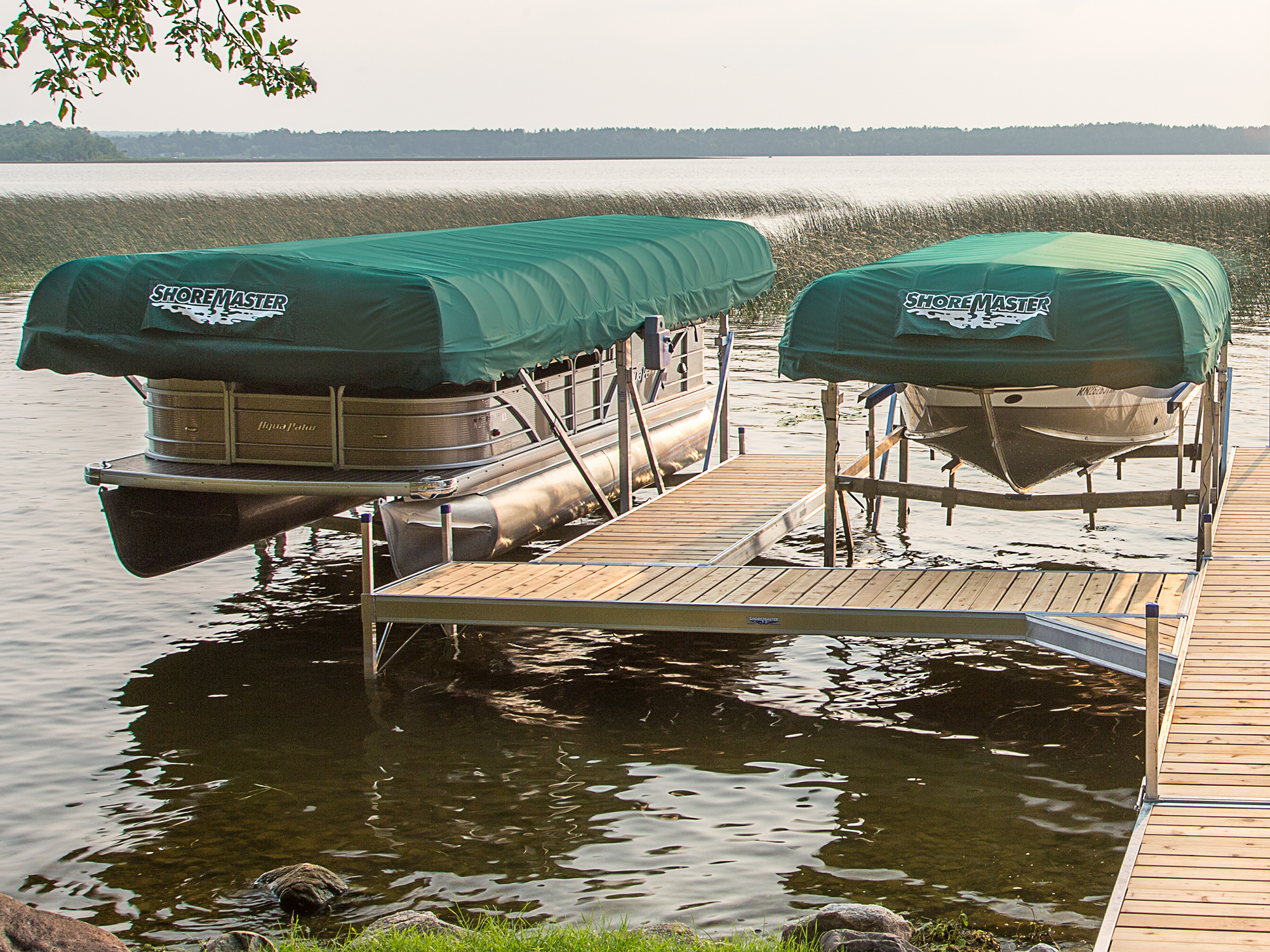
The ShoreMaster Infinity Waterfront System offers boaters a seamless and intuitive way to enhance their dock’s functionality, versatility, and safety. For instance, you can easily add dock sections to support dock-mounted lifts and install adjustable legs or a dock leveling winch to accommodate water depth fluctuations.
We also offer PVC Guide-Ons, which provide a visual aid to help ensure proper positioning during docking while protecting boats from unnecessary contact with the lift frame. Meanwhile, our Bow Guides prevent vessels from overrunning the lift while ensuring proper weight distribution.
How accessories reduce wear and simplify docking
These essential accessories take the guesswork out of docking, even in less-than-ideal conditions. By helping ensure the watercraft is always in optimal position on the lift, guide-ons, bow guides, and other model-specific boat lift accessories ensure the vessel’s weight is always evenly distributed. This protects the hull from unnecessary stress and reduces strain on the lift, effectively extending the life of both.
Bonus: Low-maintenance materials that extend life and reduce corrosion
At ShoreMaster, we combine premium materials, such as marine-grade aluminum, high-density polyethylene, and hot-dipped galvanized steel, with innovative construction techniques to produce waterfront solutions that are built to last and perform reliably in challenging marine environments.
Why ShoreMaster’s Design Philosophy Keeps You in Control
At ShoreMaster, we believe the perfect waterfront system should be capable of evolving with the owner’s needs. That’s why our design philosophy centers on modularity, adaptability, and ease of ownership. From lightweight aluminum frames to intuitive connection systems, every component is engineered for effortless customization and long-term durability. Whether you're adjusting for seasonal shifts or reconfiguring your dock layout, our systems make it effortless.
For over 50 years, our commitment to quality and innovation has enabled us to perfect our designs and produce reliable, versatile, user-friendly solutions for boaters’ waterfront requirements. Whether you need a floating dock with a distinct layout or a specialized boat lift for your unique watercraft, our innovative construction techniques and modular designs ensure a tailored setup that enhances functionality, safety, and aesthetics.
Use the dealer locator tool below to get a list of authorized ShoreMaster dealers near you and take the first step to reimagining boating convenience.
Keep Your Boat (and Lift) Balanced for the Long Run
Keeping your lift level is one of the simplest ways to protect your boat. With regular inspections and the right accessories, you can stay ahead of shifting environmental conditions, confident that your system will perform year after year.
FAQs
Q: Why does it matter if my boat is not level on the lift?
A: An unlevel boat can put uneven stress on the hull and lift components, and it often leads to annoying day-to-day issues like water pooling or awkward boarding. Getting it level makes your setup feel safer and more consistent.
Q: What’s the first thing I should check if my boat is leaning?
A: Start with bunk alignment and contact points, because misaligned bunks are a common cause of uneven support. Then check if the lift frame is sitting evenly and securely on the lake bottom.
Q: Can a boat’s weight distribution cause leveling problems?
A: Yes, because fuel, batteries, gear, and even how people load the boat can shift the center of gravity. A small change in weight placement can be the difference between “close enough” and truly level.
Q: Should I try to fix leveling issues myself or call a dealer?
A: If it’s a simple adjustment, many owners can handle it with careful, small changes and re-checking results. If the lift foundation or lake bottom is the issue, a dealer can often solve it faster and more safely.
References:
The Pricer (May 7, 2024). How Much Does Fiberglass Boat Repair Cost?


